For established operators
Companies already running collection at scale plug Bolar in beneath what they’ve built. Their collectors get paid faster, their records become verifiable, and material they already handle earns more.
About Bolar
Bolar is the payment and verification infrastructure behind Africa’s recycling economy. This is why we built it, and who we built it for.
The insight
Nigeria produces around 2.5 million tonnes of plastic waste every year. Less than 12 percent of it is recycled. The rest ends up in Lagos drainage during rainy season, in groundwater, in landfill, and eventually in the Atlantic.
The usual conclusion is that people here don’t care about recycling, or don’t understand it, or need to be educated about it.
Spend a week at any collection point in Lagos and you’ll see how wrong that is.
Hundreds of thousands of Nigerians already collect plastic. Waste pickers who walk twenty kilometres a day. Students running campus drives. Market traders. Estate associations. Mothers who separate their household waste before the truck arrives. RecyclePoints and Wecyclers have each signed up more than ten thousand households. The behaviour is already there. The willingness is already there.
A collector hands over forty kilograms of plastic and then waits. Seven days. Sometimes thirty. Sometimes what finally arrives isn’t money at all, but points in a catalogue that can’t pay rent, transport or school fees.
For someone earning daily, that wait isn’t an inconvenience. It’s a reason to stop.
So they stop. Across the sector, operators lose between forty and sixty percent of their collectors, and the reason cited most often is simply this: the money took too long.
What we built
Bolar pays a collector in under 60 seconds. Materials are weighed, the operator confirms, and money reaches the collector’s bank account, mobile wallet or phone before they leave the collection point. No minimum. No vouchers. No waiting until month end.
At the same moment, the transaction is recorded permanently and independently verifiable: what was collected, how much it weighed, where, when, and what was paid. That record can’t be edited or deleted by anyone, including us.
That single record does two jobs at once. For the collector, it’s proof of work that accumulates into something she owns. For the operator, it’s the evidence corporate buyers need before purchasing carbon credits — turning material worth around ₦200 a kilogram as scrap into roughly ₦600 a kilogram as a verified credit.
Same plastic. Same collector. Different economics for everyone.
How we work with the sector
We built Bolar to be built on. That word does specific work here.
The recycling companies operating across Nigeria have spent years earning community trust, building routes, and learning what actually works on the ground. That knowledge took time to acquire and can’t be shortcut. What most of them don’t have — and shouldn’t have to build — is a payment system, an identity layer, a fraud engine and a verification standard.
That’s our half of the work.
An operator brings the location, the relationships and the community. We bring the rails underneath: instant payment, permanent records, and access to carbon markets. Neither half works alone.
Companies already running collection at scale plug Bolar in beneath what they’ve built. Their collectors get paid faster, their records become verifiable, and material they already handle earns more.
Someone opening their first collection point starts with the same infrastructure a large company uses. The technology barrier that used to decide who could enter this industry is no longer the deciding factor.
Every collection recorded on Bolar adds to a body of verifiable environmental data that regulators, corporate buyers and researchers can actually rely on. That benefits everyone working in recycling, not only the operators using our platform.
The clearest way to describe the position: Flutterwave doesn’t sell anything online, but a great deal of Nigerian commerce runs through it. That’s what we’re building for recycling.
A single recycling company can only collect so much. Infrastructure that hundreds of operators build on has no such ceiling. That’s why we’re the layer underneath rather than another operator competing for the same collectors.
What we believe
Value 01
If money isn’t in a collector’s hands within a minute, we’ve failed. Every technical decision we make is subordinate to that. Our systems are built so a collector gets paid even when other parts of the platform are having a bad day.
Value 02
The people using Bolar are doing skilled, physical, essential work. They are not beneficiaries. They are earning. We design, write and build as though the collector is a customer with options, because she is.
Value 03
Environmental claims across this industry are mostly self-reported and unverifiable. We record everything permanently so that anyone — an operator, an auditor, a regulator, a corporate buyer — can check the work rather than trust the claim.
Value 04
Five Nigerian languages. Works offline. Runs on the phones people actually own. Integrated with Nigerian banks, Nigerian mobile money, Nigerian identity verification. We didn’t adapt something built elsewhere. We built for this market from the first line of code.
The people
Bolar was founded by three people who had each spent years building software for other companies and kept running into the same realisation: the hardest problems in African markets aren’t technical, they’re infrastructural. Someone has to build the boring layer underneath before the interesting things can happen.
The product wasn’t outsourced or prototyped. It was built properly, specified fully, and the technology is finished.

Harvey Ayibiowu
Leads the company

Richard Jeremiah
Leads engineering

Samuel Olubunmi
Built the verification layer
Behind them is a team of thirteen across engineering, product design and delivery, working across Lagos and beyond.
The team

Rita Okorafor
Product Owner

Adegoke Enoch
Scrum Master

Akinsunmi John
Fullstack Developer

Alabi-Williams Samuel
Fullstack Developer

Cathlyn Goldberg
Fullstack Developer
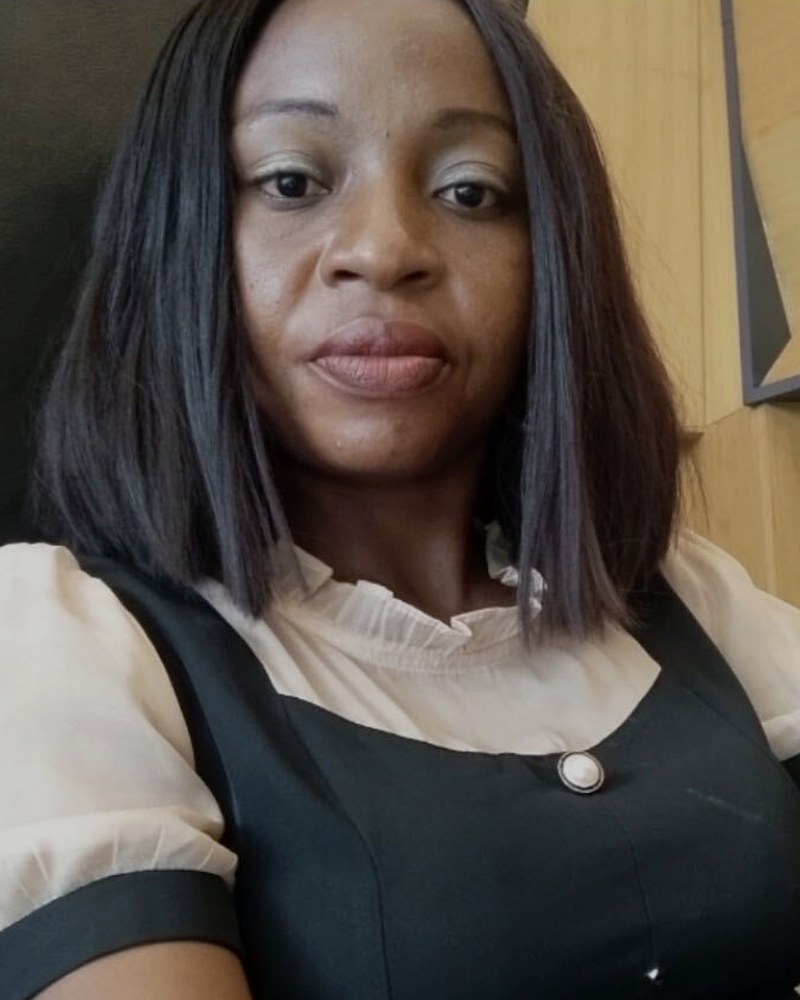
Olufunmilayo Esther Busari
Fullstack Developer

Syed Sifat
Frontend Developer
Where we’re going
We’re starting in Nigeria because the problem is largest here, the recycling sector is most developed here, and the payment rails we need already exist here.
But nothing about this problem is uniquely Nigerian. Any country with a mobile money network, an informal collection economy and unmet recycling targets has the same broken payment layer. The infrastructure we’re building doesn’t need to be reinvented to cross a border.
The measure we care about isn’t how large Bolar becomes. It’s how many people start a recycling operation because the barrier finally dropped low enough, and how many collectors stay in the work because the money finally arrives on time.
Recycling already works. We fixed the part where nobody got paid or credited for it.